
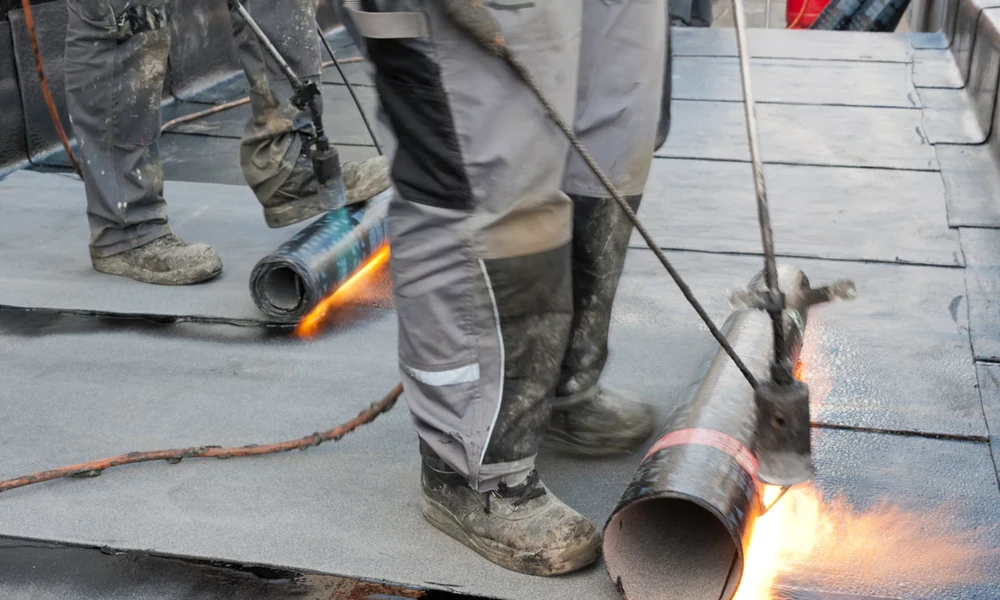

Torch-on waterproofing membrane is one of the most widely used methods of waterproofing flat roofs, podium decks, and wet areas in Singapore’s built environment. The system involves heating a modified bitumen membrane with an open-flame torch, causing it to adhere firmly to the substrate as it cools. The result, when applied correctly, is a seamless, durable barrier that resists water infiltration under the significant rainfall loads that Singapore’s climate imposes on buildings throughout the year.
What Makes Torch-On Membranes Effective
The effectiveness of a torch-on waterproofing membrane system depends on two factors in roughly equal measure: the quality of the membrane itself and the skill of the applicator. A high-grade membrane applied by an inexperienced crew will underperform. A skilled crew working with an inferior product will also struggle to achieve a durable result. The two components are inseparable.
The membrane is composed of a carrier sheet, typically polyester or fibreglass, embedded in a matrix of modified bitumen. The modification, usually with APP (atactic polypropylene) or SBS (styrene-butadiene-styrene), gives the membrane flexibility and thermal stability. APP-modified membranes handle high temperatures well and are a common choice in Singapore, where roof surfaces can reach extreme temperatures under direct sunlight. SBS-modified membranes retain greater flexibility in lower temperatures and are often used in shaded or underground applications.
The Application Process
Applying a torch-on waterproofing membrane correctly requires preparation, precision, and the right tools. The substrate must be dry, clean, and free of loose material. Any cracks, joints, or penetrations must be addressed before the membrane is laid, as these are the points where water infiltration typically begins.
The installation sequence matters. A primer is applied to the prepared substrate to improve adhesion. The membrane rolls are then positioned and heated progressively with a propane torch, causing the underside to melt and bond to the substrate as the roll is advanced. Overlaps between rolls must be sealed thoroughly, as inadequately lapped joints are the most common failure point in torch-on systems.
Detailing around penetrations, pipes, drains, upstands, and expansion joints, requires particular attention. These transitions are more complex than the flat field and must be carefully executed to prevent water from finding a path around the membrane.
Why Singapore’s Climate Makes Waterproofing Critical
Singapore receives an average of 2,340 millimetres of rain per year, distributed across the year with intensity peaks during the northeast and southwest monsoon seasons. Sudden, heavy downpours are common, and a flat roof or podium deck that lacks effective waterproofing will begin admitting water quickly under these conditions.
“Buildings must be designed and maintained to withstand Singapore’s tropical climate,” said Desmond Lee, Minister for National Development. “Waterproofing is not an optional upgrade – it is a fundamental requirement for protecting the building and the people who use it.”
The consequence of inadequate waterproofing in Singapore’s climate is not gradual deterioration. It is rapid and repeated water intrusion that damages ceilings, structural elements, electrical systems, and furnishings. The cost of remediating water damage typically far exceeds the cost of preventive waterproofing.
Comparing Torch-On to Other Waterproofing Methods
Torch-on membrane systems compete with several other waterproofing technologies in Singapore, including liquid-applied membranes, crystalline waterproofing, and sheet membranes with self-adhesive bonding. Each has its appropriate applications.
Liquid-applied systems offer flexibility in detailing complex geometries but require multiple coats and can be affected by application thickness inconsistencies. Self-adhesive sheet membranes avoid open flame but may not bond as firmly to all substrates. Crystalline systems work by penetrating the concrete substrate rather than forming a surface barrier, making them suitable for below-grade applications but not for exposed roof surfaces.
Torch-on membrane systems remain the preferred choice for large flat roofs and podium decks where a robust, long-lasting barrier is the primary requirement, because the heat-bonded joint between membrane and substrate, when correctly applied, creates a bond that resists both uplift and water penetration reliably.
Maintenance and Longevity
A correctly installed torch-on membrane system will typically provide effective waterproofing for fifteen to twenty years, though this figure depends on the quality of the material, the quality of the installation, and the level of maintenance the surface receives. Flat roofs that are inspected annually and have minor damage addressed promptly will perform at the high end of this range.
Common maintenance requirements include checking lap joints and flashings for any signs of separation, ensuring drains remain clear, and inspecting penetration details after periods of heavy rainfall. Areas of ponding water, where the surface has deflected and no longer drains properly, should be investigated and corrected, as standing water accelerates membrane degradation.
Choosing a waterproofing membrane supplier and installer with a track record of durable, well-detailed installations is the most reliable way to ensure that a torch-on waterproofing membrane system performs throughout its intended service life.
